Diamond Anatomy
Understanding the parts of a diamond — table, crown, girdle, and pavilion — and how they combine to produce brilliance.
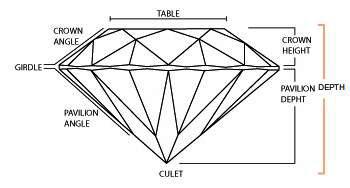
Diamonds are widely used in earrings, rings and many other forms of jewellery. No matter how they are set, they make their surroundings shine. This brilliance is determined by the diamond's anatomy — its basic structure. There are five main parts to a diamond's anatomy, each playing a critical role in the stone's beauty and performance.
The Table
The table is the extremely polished, flat surface at the very top of the diamond. It is the most important facet because it is the primary place where light enters and exits the stone. A well-proportioned table allows the maximum amount of light to pass through, contributing directly to brilliance.
The Crown
The crown extends from the table down to the girdle and contains several facets angled to disperse light. In most settings it is the part suspended above the prongs or other holders, making it the most visible surface area. Because of its exposed position, the crown is also the area most likely to accumulate surface scratches over time.
The Girdle
The girdle is the widest edge of the diamond — the narrow band that forms its perimeter. It cannot be too thick or too thin, as either extreme will affect the stone's structural integrity and its appearance when set. The girdle's proportions play a role in determining the diamond's overall value and are carefully assessed by grading laboratories.
The Pavilion
The pavilion is usually hidden beneath the prongs and is the longest section of the diamond, extending from the girdle to the culet. The pavilion's depth determines whether light will seep through the bottom or sides of the stone, or be reflected back up through the crown. A well-cut pavilion directs the maximum amount of light upward, producing the brilliance diamonds are celebrated for.
The Culet
The culet is the smallest facet, located at the very bottom point of the diamond. Its small size helps prevent the tip from chipping, thereby maintaining the shape and durability of the stone. In many modern cuts, the culet is so small it appears as a point rather than a visible facet.